Balec
Medieval fortified town and bishopric near Shkodër, now in ruins.

Wikipedia / Wikimedia Commons
Balec (Albanian: Baleci) was a medieval fortified town near Shkodër in Albania, originating in Roman times. It served as a seat of a župa in the Kingdom of Duklja and later the Lordship of Zeta, and was a bishopric center. Its strategic importance led to conflict during the Second Scutari War and Skanderbeg's rebellion, after which it fell into ruin.
- Location
- Near Shkodër, Albania
- Period
- Roman to Ottoman era
- First attested
- 6th century
- Notable for
- Fortress, bishopric, pronoia under Venice
- Population (1417)
- 25 households
- Population (1485)
- 11 households
- Status
- Ruins
Lore & Background
Balec was built on a Roman settlement destroyed by Avars and Slavs, near the road from Shkodër to Duklja and Onogošt. Under Byzantine rule it was part of the Dyrrhachium theme. The Kingdom of Duklja, under Stefan Vojislav, captured it in the 11th century, and after his death in 1044 control passed to his son Mihailo I Vojislavljević. In the 14th century, the Balšić family's Lordship of Zeta held the region.
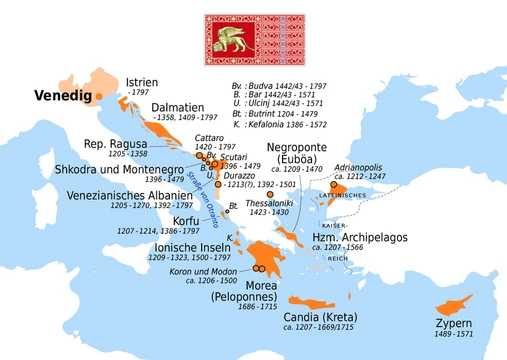
At the beginning of the 15th century, the Venetian Republic took control, reducing Balec to a small pronoia of 25 houses. Radiq Humoj was appointed pronoiar in 1402–1403, confirmed by the Venetian Senate in 1404. After his death, his brother Andrea and son Kojaçin inherited the pronoia, confirmed in 1419. During Skanderbeg's war with Venice in 1448, his forces rebuilt the fortress and garrisoned 2,000 soldiers under Marin Spani, but Venetians soon retook and demolished it.
Ottoman plans in 1474 to rebuild Balec and settle 5,000 Turkish families were never implemented. The town remained in ruins, as described by Marin Barleti. The Venetian cadastre of 1416–1417 records overwhelmingly Albanian inhabitants, including branches of the Lepuroshi, Kakarriqi, Prekali, and Tuzi tribes, and 8 Catholic priests. The Diocese of Balec, first mentioned in 1062, had at least three churches and a Benedictine monastery.
Reader's Guide
Balec illustrates the shifting political and military control in medieval Albania, from Byzantine and Slavic kingdoms to Venetian and Ottoman powers. Its role as a bishopric and administrative center highlights the region's religious and cultural complexity, with Albanian tribes and Catholic clergy coexisting under Venetian rule. The fortress's brief rebuilding by Skanderbeg in 1448 underscores its strategic value in cutting supply routes to Dagnum. The town's decline and abandonment reflect the broader devastation of the Second Scutari War and the failure of Ottoman resettlement plans. Today, the ruins serve as a tangible reminder of medieval fortification and settlement patterns in the Shkodër area.
Did You Know?
- Balec was first mentioned by name in the 6th century.
- The Venetian census of 1417 recorded only 25 houses in Balec.
- Skanderbeg's forces rebuilt the fortress in 1448 but were driven out by Venetians.
- The Ottoman plan to settle 5,000 Turkish families in Balec in 1474 was never carried out.
More in Stato da Màr 1-24
Spotted an error? Know more?
This is a living reference — every entry is fact-audited, and reader corrections feed straight into our audit queue. Suggest an edit · See this site's audit record