Methoni, Messenia
Coastal fortress and trade hub in the Peloponnese.
Methoni, also known historically as Methone or Modon, is a village in the Messenia region of the Peloponnese, Greece. It was once its own municipality but, following a 2011 administrative reform, became a municipal unit within the larger municipality of Pylos-Nestor. The name possibly comes from Mothona, a rock from myth. Covering 97.202 square kilometers, this municipal unit includes several other settlements: Grizokampos, Foinikounta, Foiniki, Lachanada, Varakes, Kainourgio Chorio, Kamaria, Evangelismos, and the Oinnoussai Islands (Sapientza, Schiza, and Santa Marina). These islands naturally shelter Methoni’s harbor. The local economy relies heavily on tourism, which is drawn by sandy shores like Tapia, Kokkinia, and Kritika, as well as by the town’s historic castle.
- location
- Messenia, Peloponnese, Greece
- area
- 97.202 km² (municipal unit)
- known_for
- Historical castle, Venetian and Ottoman history, Homeric association with Pedasus
- notable_events
- Siege by Bayezid II (1500), Venetian recapture (1686), Ottoman recapture (1715), Greek War of Independence siege
- population_note
- Venetian census after 1686 listed 236 inhabitants
Lore & Background
Methoni has been identified as the city of Pedasus, which Homer mentions under the name 'ampeloessa' (of vine leaves), as the last of the seven εὐναιόμενα πτολίεθρα (well-peopled cities) that Agamemnon offers Achilles. Pausanias knew the city as Mothone, named either after the daughter of Oeneus or after the rock Mothon, which protects the harbour, and mentioned a temple to Athena Anemotis there. Along with the rest of Messenia, the town gained its independence from the Spartans in 369 BC. Roman historian Ammianus Marcellinus wrote that the earthquake of AD 365 caused a tsunami that stranded a Laconian vessel near Methoni.
Reader's Guide
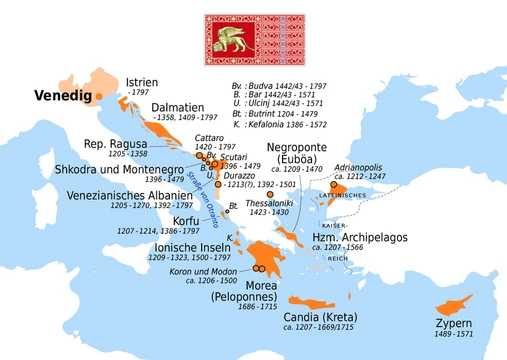
Methoni's significance lies in its long history as a strategic port and fortress, from antiquity through the Venetian and Ottoman periods. Under Venetian rule (from 1206/7), it became a key staging point on the route between Venice and the Holy Lands, with a mixed population of Greeks, Jews, Albanians, and Latins. Its capture by Sultan Bayezid II in 1500 after a 28-day siege led to a massacre or enslavement of the populace. The town was briefly held by the Knights Hospitaller in 1532 and returned to Venice in 1686, only to fall again to the Ottomans in 1715. During the Greek War of Independence, it remained in Ottoman hands until surrendering to the French Morea Expedition in 1828. The fortress and beaches now attract tourism, and the site is linked to literary figures: Miguel de Cervantes was held prisoner there after the Battle of Lepanto, and François-René de Chateaubriand disembarked there in 1806.
Did You Know?
- Methoni may be named after Mothona, a mythical rock.
- The Oinnoussai Islands (Sapientza, Schiza, Santa Marina) form a natural protection for Methoni harbour.
- In 1125, Venice launched an attack against pirates based at Methoni who had captured Venetian traders.
- Miguel de Cervantes was taken to Methoni as a prisoner after the Battle of Lepanto and may have conceived parts of Don Quixote there.
More in Stato da Màr 1-24
Spotted an error? Know more?
This is a living reference — every entry is fact-audited, and reader corrections feed straight into our audit queue. Suggest an edit · See this site's audit record