Mykonos
Greek island in the Cyclades, famed for winds and nightlife.
Mykonos is a Greek island in the Cyclades, known as 'The Island of the Winds' due to its strong winds. It is a major tourist destination, famous for its beaches, nightlife, and traditional Cycladic architecture, with a history spanning from ancient times through Ottoman rule to modern independence.
- area
- 85.5 square kilometres (33.0 sq mi)
- highest elevation
- 341 metres (1,119 feet)
- population
- 10,704 (2021 census)
- location
- Aegean Sea, 150 km east of Athens
- nickname
- The Island of the Winds
- climate
- Hot semi-arid (Köppen BSh)
Lore & Background
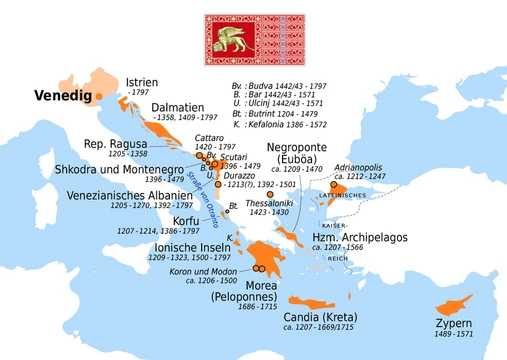
Mykonos's name has two proposed origins: from the ancient Greek 'Mykon' meaning 'pile of stones', or from the mythological hero Mykonos, son of Anius. According to myth, the island was the site of the Gigantomachy, where Heracles killed giants, and the large rocks are said to be their petrified corpses. Historically, Herodotus mentions Carians as original inhabitants, followed by Ionians from Athens in the early 11th century BC. The island was poor in ancient times but served as a supply hub for nearby Delos. After Alexander the Great, it joined the League of the Islanders, then came under Roman and Byzantine rule. In 1204, it was occupied by Andrea Ghisi, ravaged by Catalans in the late 13th century, and given to direct Venetian rule in 1390. In 1537, Hayreddin Barbarossa attacked, and Mykonos became part of the Ottoman Empire until 1830, known in Turkish as 'Mukene'. During Ottoman rule, it had self-governance with a governor and council of syndics. The island prospered as a trading center until the late 18th century, despite pirate raids. In June 1794, the Battle of Mykonos occurred between British and French ships in the main harbor. During the Greek Revolution (1821), Mykonos played an important role led by Manto Mavrogenous, who sacrificed her family's fortune. Greece became independent in 1830. In February 1884, British travellers Theodore and Mabel Bent visited to witness traditional funeral lamentations. The economy declined after the opening of the Corinth Canal in 1904 and World War I, leading to emigration. In September 1944, the Greek Sacred Squadron raided the German garrison, liberating the island on 30 September 1944. Tourism grew after excavations began on Delos in 1873, and Mykonos became popular with international jet set in the 1960s, a nude beach spot for Americans in the 1970s, and a gay tourist destination in the 1980s. By the 2000s, it was one of Greece's most expensive islands.
Reader's Guide
Mykonos's significance lies in its transformation from a poor ancient island to a global tourism icon. Its history reflects broader Mediterranean shifts: from ancient polytheism and Hellenistic leagues, through Roman and Byzantine control, to Venetian and Ottoman rule, and finally Greek independence. The island's role in the Greek Revolution, led by Manto Mavrogenous, highlights its contribution to national identity. The 1944 commando raid against the German garrison underscores its World War II involvement. Economically, Mykonos shifted from trade to tourism, driven by archaeological work on Delos and its appeal to international travelers from the 1960s onward. Its nickname 'Island of the Winds' and rocky terrain, linked to the Gigantomachy myth, add cultural depth. Today, it is a top summer destination with upscale nightlife, hosting an estimated 1.5 million visitors annually, and its economy relies on reverse osmosis for water supply. The municipality includes Delos and Rineia, and the island's architecture and beaches remain key attractions.
Did You Know?
- Mykonos's nickname 'The Island of the Winds' comes from the very strong winds that usually blow on the island.
- According to myth, the large rocks on Mykonos are said to be the petrified corpses of giants from the Gigantomachy.
- The island was known as 'Mukene' during Ottoman rule.
- Mykonos produces 4,500 cubic metres of water daily by reverse osmosis of sea water.
More in Stato da Màr 1-24
Spotted an error? Know more?
This is a living reference — every entry is fact-audited, and reader corrections feed straight into our audit queue. Suggest an edit · See this site's audit record