Nafplio
First capital of modern Greece and historic seaport.
Nafplio (also known as Nafplion, Nauplia, or Navplion) is a coastal city in the Peloponnese, Greece, and the capital of the regional unit of Argolis. It served as the first official capital of the modern Greek state from 1827 to 1834, making it a key site in the establishment of independent Greece.
- location
- Argolic Gulf, northeast Peloponnese, Greece
- modern_name
- Nafplio (Ναύπλιο)
- historical_names
- Nauplia, Napoli di Romania, Mora Yenişehir, Anabolı
- first_capital_of_modern_Greece
- 1827–1834
- founded
- Antiquity (mentioned in 14th century BCE Egyptian inscription)
- notable_for
- First capital of modern Greece; major tourist destination
Lore & Background
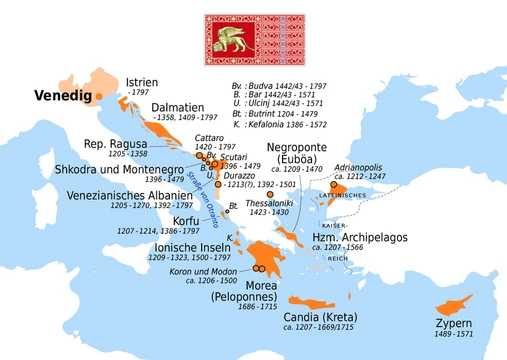
Nafplio's history stretches back to antiquity, with the earliest known reference appearing in the 14th century BCE 'Aegean List' from the Mortuary Temple of Amenhotep III. In Classical Antiquity, it was known as Nauplia and served as the port of Argos. The city was conquered by the Argives around the time of the Second Messenian War, and by the 2nd century CE, Pausanias described it as deserted. During the Middle Ages, Nafplio became an important seaport under Frankish, Venetian, and Ottoman rule. It was taken in 1212 by French Crusaders and later sold to the Republic of Venice in 1388. Under Venice, it repelled Ottoman sieges before surrendering in 1540. The Venetians retook it in 1685 and built the castle of Palamidi, but lost the city again to the Ottomans in 1715.
Reader's Guide
Nafplio's significance lies in its role as the first capital of the modern Greek state, a status it held from 1827 to 1834. After the Greek War of Independence, Count Ioannis Kapodistrias made it the official capital in 1829, and it remained so until King Otto moved the capital to Athens. The city's fortifications, including the Acronauplia and Palamidi, reflect its strategic importance under successive powers. Today, Nafplio is a major tourist destination, attracting visitors from Greece and abroad for its architectural legacy, mild climate, and proximity to Athens. Its economy relies on tourism and agriculture, producing oranges, lemons, olives, and almonds. The city's name has varied over centuries—from Nauplia in antiquity to Napoli di Romania under Venice and Mora Yenişehir under the Ottomans—illustrating its layered history.
Did You Know?
- The oldest reference to Nafplio appears in a 14th century BCE Egyptian inscription from the Mortuary Temple of Amenhotep III.
- Under Venetian rule, the city was called Napoli di Romania to distinguish it from Naples in Italy.
- The castle of Palamidi was the last major construction of the Venetian empire overseas.
- Count Ioannis Kapodistrias, first head of state of independent Greece, was assassinated on the steps of the church of Saint Spyridon in Nafplio in 1831.
More in Stato da Màr 1-24
Spotted an error? Know more?
This is a living reference — every entry is fact-audited, and reader corrections feed straight into our audit queue. Suggest an edit · See this site's audit record