Pteleos
Historic village and former municipality in Thessaly, Greece.
Pteleos is a village and former municipality in southern Magnesia, Thessaly, Greece. Following the 2011 local government reform, it became a municipal unit within the municipality of Almyros. This unit covers 118.230 square kilometers and had a population of 1,990 as of 2021.
People have lived in the area since prehistoric times, though it should not be confused with the ancient Pteleum in Elis mentioned in Homer’s Iliad. Mycenaean-era tombs can still be found between Pteleos and Agioi Theodoroi. The modern village sits farther north and inland than earlier settlements. An ancient settlement, inhabited into early Byzantine times, stood on the southern coast of the Bay of Pteleos near modern Achilleion, where a mosaic floor and remains of two early Christian basilicas have been uncovered. The medieval settlement, first recorded in 1192 when “wine from Pteleos” was traded in Constantinople, was located on the northern part of the bay near present-day Pigadi.
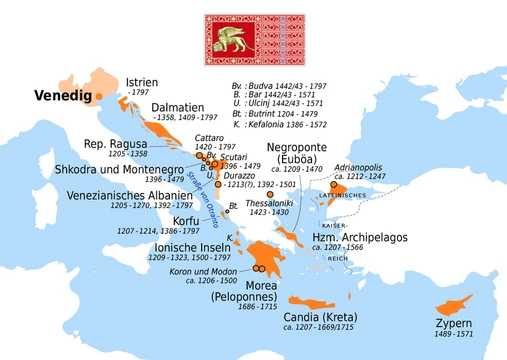
After the Fourth Crusade in 1204, the area fell under the Frankish Kingdom of Thessalonica, but the Despotate of Epirus reclaimed it in 1218. Epirote control continued until the Empire of Nicaea (and later the restored Byzantine Empire) took over after the Battle of Pelagonia, though the region was often under the influence of the autonomous Greek rulers of Neopatras. When the Catalans occupied Neopatras in 1319, the fortress of Pteleos (castrum Phtelei) was handed over to the Republic of Venice in 1322, with approval from both the Byzantines and local inhabitants. Venice installed a rector and a castellan, administering the fortress as part of its colony of Negroponte. In 1350, Catalans and their Albanian allies plundered it, but Venice held the outpost until 1470, when it surrendered to the Ottoman Empire after the loss of Negroponte. The inhabitants were then deported to repopulate Constantinople. Ruins of the medieval fortress survive southwest of Pigadi, including a square donjon, a cistern, house foundations, a town wall, and a coastal watchtower called Alatopyrgos (“salt tower”).
- location
- Southern Magnesia, Thessaly, Greece
- municipal_unit_area
- 118.230 km2
- population_2021
- 1,990
- first_attested
- 1192
- venetian_control
- 1322–1470
- ottoman_surrender
- 1470
Lore & Background
After the Fourth Crusade (1204), the area passed under the Frankish Kingdom of Thessalonica, but was recovered by the Despotate of Epirus in 1218. Epirote rule continued until the area was occupied by the Empire of Nicaea following the Battle of Pelagonia, though it was probably often under the control or influence of the autonomous Greek rulers of Neopatras. In 1322, the castrum Phtelei was taken over by the Republic of Venice, with the agreement of the Byzantines and the inhabitants. Venice installed a rector and a castellan, administering the fortress as part of its colony of Negroponte. In 1350 it was plundered by the Catalans and their Albanian allies, but remained in Venetian hands until 1470, when it was surrendered to the Ottoman Empire after the loss of Negroponte. Its inhabitants were deported to repopulate Constantinople. Parts of the ruined medieval fortress survive southwest of Pigadi.
Reader's Guide
Pteleos holds significance as a settlement with continuous habitation from prehistoric times through the medieval period, serving as a strategic Venetian outpost on the Greek mainland for nearly 150 years. Its mention in 1192 as a source of wine traded in Constantinople highlights its economic role in the Byzantine era. The survival of Mycenaean tombs, early Christian basilicas, and a medieval fortress with a donjon, cistern, and watchtower provides tangible links to its layered history. The Venetian period (1322–1470) is particularly notable, as Pteleos remained an isolated mainland possession of the Republic of Negroponte even after Catalan and Albanian raids. Its eventual surrender to the Ottoman Empire in 1470 and the deportation of its inhabitants to repopulate Constantinople mark the end of its medieval prominence. Today, as a municipal unit of Almyros, Pteleos preserves archaeological and architectural remnants that illustrate the complex political shifts in Thessaly over millennia.
Did You Know?
- The medieval settlement of Pteleos is first attested in 1192, when 'wine from Pteleos' was traded in Constantinople.
- The castrum Phtelei was taken over by the Republic of Venice in 1322 with the agreement of the Byzantines and the inhabitants.
- In 1470, Pteleos was surrendered to the Ottoman Empire, and its inhabitants were deported to repopulate Constantinople.
- Parts of the ruined medieval fortress, including a square donjon and a watchtower called Alatopyrgos, survive southwest of Pigadi.
More in Stato da Màr 1-24
Spotted an error? Know more?
This is a living reference — every entry is fact-audited, and reader corrections feed straight into our audit queue. Suggest an edit · See this site's audit record