Savi agli Ordini
Senior Venetian magistrates overseeing maritime affairs and legislation.
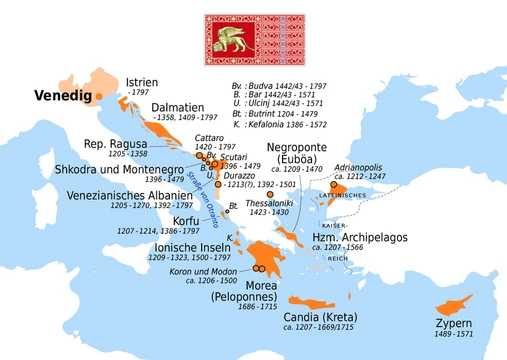
The Savi agli Ordini—literally “Wise Men on the Orders”—were senior magistrates in the Republic of Venice responsible for overseeing maritime affairs: commerce, the navy, and the overseas territories known as the Stato da Màr. They formed the earliest board of expert advisors, or *savi*, created to assist Venice’s leadership in drafting legislation for the Senate, the Council of the Forty, or the Great Council. Alongside later *savi* boards established in the 14th and 15th centuries, they served on the Full College (*Pien Collegio*), the republic’s de facto cabinet. In 1442, they were formally added to the Senate as ex officio members.
Originally elected each November for a one-month term, their sole task was to shape commercial policy—deciding the size and destinations of the spring trade convoys—and naval policy, particularly equipping the “guard fleet” for operations in the Adriatic, Aegean, and eastern Mediterranean. By around 1330, the office had become a permanent fixture, and terms were extended to a full year. In the 15th century, like other high Venetian magistracies, eligibility was restricted: members were elected by the Senate, served six-month terms starting on 1 April or 1 October, and could not be re-elected to the same post for another six months.
Their importance dropped sharply after the disastrous Second Ottoman–Venetian War ended in 1503. The position became a training ground for politics, typically given to younger, less experienced patricians than those on other *savi* boards. They sat in a lower place in the Full College’s meeting hall and had to leave when the heads of the Council of Ten entered. As the 16th-century political writer Donato Giannotti put it, “their office is to be silent and listen.” Like all *savi*, the role carried no salary but could be held alongside other public offices.
- field
- Maritime administration and legislation
- nationality
- Venetian
- known_for
- Supervision of commerce, navy, and overseas colonies; earliest board of savi
- term_length
- Originally one month, later extended to one year, then six months
- established
- c. 1330 as a fixture; earlier origins
Lore & Background
The five Savi agli Ordini were originally elected every November for a term of a month to formulate commercial policy—on the size and destination of trade convoys sailing each spring—and naval policy, including the outfitting of the 'guard fleet' for operations in the Adriatic Sea, the Aegean Sea, and the Eastern Mediterranean. By c. 1330 they had become a permanent fixture, with terms extended to a full year. In 1442, they were aggregated to the Senate, becoming ex officio members.
Reader's Guide
The Savi agli Ordini played a foundational role in the Venetian Republic's governance as the first board of savi, helping the Signoria prepare legislation for key councils. Their responsibilities encompassed maritime commerce, the navy, and the Stato da Màr, reflecting Venice's identity as a maritime republic. However, after the disastrous Second Ottoman–Venetian War ended in 1503, their significance declined considerably. The office became a training position for younger, less experienced patricians, who sat in a lower place in the Full College and had to depart when the heads of the Council of Ten entered. As Donato Giannotti noted, 'their office is to be silent and listen.' Like all savi, the post carried no salary but could be held alongside other public offices. Their evolution from a powerful policy-making body to a ceremonial training role illustrates the shifting priorities and political dynamics of Renaissance Venice.
Did You Know?
- The Savi agli Ordini were the earliest board of savi established to help the Venetian leadership.
- They were originally elected for a term of one month, later extended to one year, then six months.
- After 1503, the office declined and was used as a political training position for younger patricians.
- The office carried no salary but could be held in tandem with other public offices.
More in Stato da Màr 1-24
Spotted an error? Know more?
This is a living reference — every entry is fact-audited, and reader corrections feed straight into our audit queue. Suggest an edit · See this site's audit record