Skopelos
Greek island in the Northern Sporades, famed for ancient wine.
Skopelos is a Greek island in the western Aegean Sea, part of the Northern Sporades group within the Thessaly region. It is known for its legendary founding by Staphylos, son of Dionysos, and for its ancient wine production, which was praised by figures such as Pliny the Elder and referenced in Sophocles' play Philoctetes.
- location
- Western Aegean Sea, Greece
- area
- 96 km² (37 sq mi)
- highest_point
- Mount Delphi (681 m)
- population_center
- Skopelos (Chora), 3,090 inhabitants (2011 census)
- major_communities
- Glossa, Neo Klima (Elios)
- historical_name
- Peparethos (Peparethus)
Lore & Background
According to legend, Skopelos was founded by Staphylos, a son of the god Dionysos and the princess Ariadne of Crete. Historically, in the Late Bronze Age the island—then known as Peparethos—was colonized by the Minoans, who introduced viticulture. The island was renowned throughout the ancient Greek world for its wine; Sophocles' play Philoctetes (409 BC) mentions a wine merchant bound for 'Peparethos, rich in grapes and wine'. Pliny the Elder records that the physician Apollodorus recommended Peparethian wine to King Ptolemy, noting it required six years of aging.
Reader's Guide
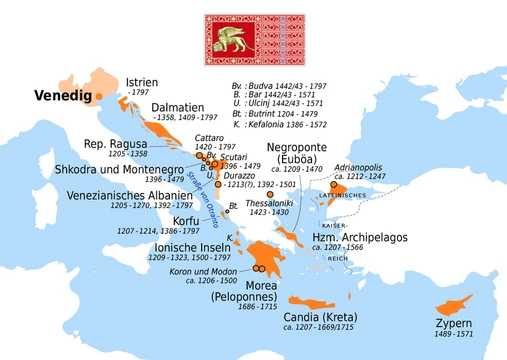
Skopelos has a complex history of successive rulers, including Athens, the Kingdom of Macedon, the Roman Republic and Empire, the Byzantine Empire, the Latin Empire, the Republic of Venice, and the Ottoman Empire. It became part of the First Hellenic Republic in 1830 under the London Protocol. During World War II, it was occupied by Italy (1941–1943) and then Nazi Germany (1943–1944). The island's economy now depends on tourism, boosted by the filming of Mamma Mia! in 2007. Agriculture, once central, has declined; wine production was devastated by phylloxera in the 1940s. Skopelos is notable for its matrilineal society, where wealth passes through the female line. It is one of the greenest Aegean islands, with forests of Aleppo pines and Kermes oaks.
Did You Know?
- Skopelos is slightly larger than Mykonos and Santorini.
- A Mycenaean royal tomb was uncovered in the Staphylos/Velanio area in 1936.
- The island has a matrilineal inheritance custom, unusual in Greece.
- Neo Klima was built after the 1965 earthquake to house displaced residents.
More in Stato da Màr 1-24
Spotted an error? Know more?
This is a living reference — every entry is fact-audited, and reader corrections feed straight into our audit queue. Suggest an edit · See this site's audit record