Spinalonga
A fortified island that became a leper colony.
Spinalonga is a small, rocky island in the Gulf of Elounda, northeastern Crete, Greece. It is historically significant as a Venetian fortress, an Ottoman refuge, and a leper colony in the early 20th century, and today it is a major tourist site.
- location
- Gulf of Elounda, northeastern Crete, Greece
- area
- 85,000 square meters
- highest_point
- approximately 50 meters
- periods_of_use
- Venetian fortress (1210–1715), Ottoman refuge (1715–1903), leper colony (1904–1957)
- current_status
- Uninhabited since 1962; second most visited tourist site in Crete
Lore & Background
The island's name likely derives from the Venetian adaptation of the Greek expression 'stin Elounda' (to Elounda), transformed into 'spina longa' (thorn long). During the Ottoman period, it was called 'Spirlonga', possibly from mispronunciation or a local legend. In the leper colony era, it was nicknamed 'the island of the living dead'.
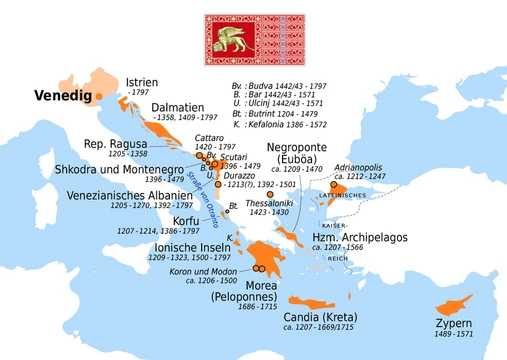
Spinalonga was fortified by the Venetians from 1578, with blockhouses and a fortification ring designed by engineer Genese Bressani. It remained in Venetian hands after the rest of Crete fell to the Ottomans in 1669, along with Gramvousa and Souda. In 1715, it was surrendered to the Ottomans, who then slaughtered and enslaved the inhabitants. It later became a refuge for Muslim families fearing persecution.
From 1904 to 1957, Spinalonga served as a mandatory isolation colony for leprosy patients. The first 251 lepers arrived in October 1904. Conditions were squalid, with little community until the 1930s. The island was not intended for treatment, only isolation. It has been uninhabited since 1962.
Reader's Guide
Spinalonga's significance lies in its layered history as a strategic Venetian fortress, an Ottoman refuge, and a leper colony. Its fortifications, built in the late 16th century, were among the last Venetian strongholds in Crete, and its role as a leper colony from 1904 to 1957 reflects the stigmatization and isolation policies of the era. The island's nickname 'the island of the living dead' underscores the social abandonment of those sent there. Today, it is the second most visited tourist site in Crete, drawing visitors to its restored ruins and historical resonance. The island's geography—rocky, with steep cliffs and sparse foliage—shaped its defensive and isolated character. The lack of serious archaeological excavation means much of its ancient past remains unknown, preserving an air of mystery.
Did You Know?
- The island's name may come from the Venetian phrase 'spina longa', meaning 'thorn long'.
- During the leper colony era, a yellow flag flew from the highest point to warn of leprosy.
- The island was nicknamed 'the island of the living dead' during the leper colony period.
- Prickly pears on the island are not native; they were brought by the French or Venetians.
More in Stato da Màr 1-24
Spotted an error? Know more?
This is a living reference — every entry is fact-audited, and reader corrections feed straight into our audit queue. Suggest an edit · See this site's audit record