Tinos
Greek island known for its pilgrimage church and artistic heritage.
Tinos is a Greek island in the Aegean Sea, part of the Cyclades archipelago. It is known for the Church of Panagia Evangelistria, which holds a reputedly miraculous icon of the Virgin Mary and is the center of a yearly pilgrimage on 15 August. The island is also notable for its windmills, artistic dovecotes, and coexistence of Greek Orthodox and Catholic populations.
- location
- Aegean Sea, Cyclades archipelago, Greece
- area
- 194.464 square kilometres (75.083 sq mi)
- population
- 8,934 (2021 census)
- highest_point
- Mount Tsiknias, 750 metres (2,460 feet)
- known_for
- Church of Panagia Evangelistria, pilgrimage, windmills, dovecotes, sculptors and painters
Lore & Background
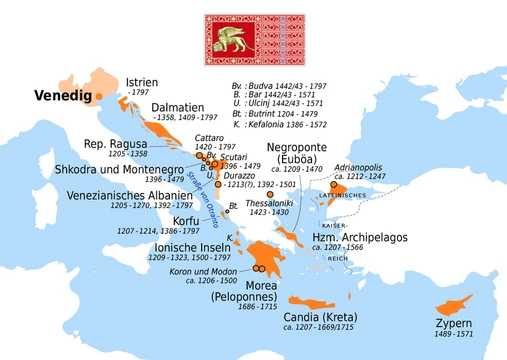
Anciently called Tenos, the island was also known as Hydroussa for its springs and Ophioussa for its snakes. During the Persian invasion of Greece, Tenians were forced to serve in the Persian fleet, but a Tenian trireme deserted to the Greeks before the Battle of Salamis in 480 BCE. The Tenians later joined the Delian League and paid an annual tribute of 3600 drachmae. The island was held by Venice from 1390 until 1715, when it was captured by the Ottoman Empire, and it joined the Greek War of Independence in 1821.
Tinos has a varied landscape with beaches, mountains, and a surreal boulder field near Volax. The island's mineral resources include marble, Verde antico, asbestos, and granite. The Meltemi winds are strong, dry north winds that blow from mid-May to mid-September. Tinos has three ports, a heliport, and regular bus services linking the town with villages.
Reader's Guide
Tinos holds a central place in Greek religious life due to the Church of Panagia Evangelistria and its annual pilgrimage on 15 August, the Dormition of the Virgin Mary. Many pilgrims crawl on hands and knees from the ferry wharf to the church as a sign of devotion. The island is also renowned for its artistic output, producing notable sculptors and painters such as Yannoulis Chalepas, Nikiforos Lytras, and Nikolaos Gysis. Its 80 windmills and 1,000 dovecotes are distinctive architectural features. Historically, Tinos was a Venetian stronghold and later an Ottoman territory before joining independent Greece. The sinking of the Greek cruiser Elli by an Italian submarine in the harbor on 15 August 1940 is a significant event in modern Greek history.
Did You Know?
- Tinos has about 80 windmills and 1,000 artistic dovecotes.
- The island was called Ophioussa in antiquity because it abounded in snakes.
- A Tenian trireme deserted to the Greeks just before the Battle of Salamis in 480 BCE.
- The Greek cruiser Elli was sunk in Tinos harbor on 15 August 1940 by an Italian submarine.
More in Stato da Màr 1-24
Spotted an error? Know more?
This is a living reference — every entry is fact-audited, and reader corrections feed straight into our audit queue. Suggest an edit · See this site's audit record