Venetian Works of Defence between the 16th and 17th centuries: Stato da Terra – Western Stato da Mar
Six bastion forts built by the Republic of Venice.
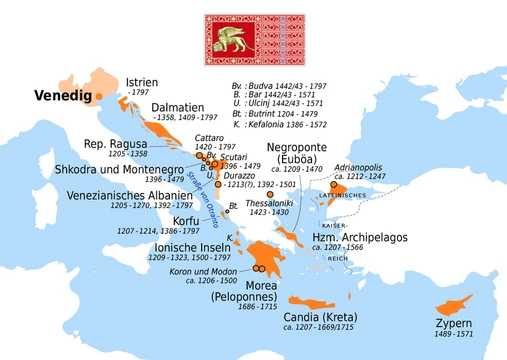
The Venetian Works of Defence between the 16th and 17th centuries: Stato da Terra – Western Stato da Mar is a UNESCO World Heritage Site made up of six bastion forts built by the Republic of Venice across its mainland holdings (Stato da Terra) and its overseas territories (Stato da Mar). These strongholds reflect a major shift in military thinking and fortress design, driven by the growing use of firearms and the cannon’s dominance on the battlefield in the early modern period. This change led to the creation of the bastion fort—also known as *alla moderna* fortifications—which featured a polygonal shape with bulwarks at the corners. The Republic of Venice pioneered this design, which later spread across Europe and remained the standard for defense until the 1800s. In 2017, six such fortifications in Italy, Croatia, and Montenegro were added to the UNESCO list. These sites are prime examples of the design, show the influence of Renaissance-era Venice, and mark a key development in the history of warfare.
The six sites illustrate the range of architectural styles and fortresses used by the Venetians. The fortified town of Kotor, built in the 1400s, is the oldest, representing a transition from traditional fortress design to the *alla moderna* style. In the 1500s, the fortifications of Bergamo and the Fort of St. Nikola were constructed, introducing a more complex, centralized system of bastions, walls, and moats. The defenses at Zadar, Peschiera del Garda, and Palmanova were finished in the 1600s.
- field
- Military architecture and fortification
- nationality
- Republic of Venice
- known_for
- Development of the bastion fort (alla moderna) design
- heritage_status
- UNESCO World Heritage Site (inscribed 2017)
- number_of_sites
- 6
- locations
- Italy, Croatia, Montenegro
Lore & Background
The six sites that make up the World Heritage site demonstrate the breadth of the architectural styles and fortresses employed by the Venetians. Built in the 15th century, the fortified town of Kotor is the oldest site, displaying a transitional period between traditional fortress design and alla moderna design. In the 16th century, the fortifications in Bergamo and the Fort of St. Nikola were built, showing the addition of a more complex and centralized system of bastions, walls, and moats. The defences at Zadar, Peschiera del Garda, and Palmanova were completed in the 17th century.
Reader's Guide
The Venetian Works of Defence between the 16th and 17th centuries: Stato da Terra – Western Stato da Mar is significant as a UNESCO World Heritage Site that preserves six quintessential examples of the bastion fort, or alla moderna, design. These fortifications originated from the Republic of Venice and soon spread throughout Europe, remaining the standard for defence until the 19th century. The sites illustrate the influence of Renaissance-era Venice and pay testimony to a major advancement in the history of warfare, specifically the shift in military strategy and fort design driven by the increase in firearm warfare and the dominance of the cannon. The collection spans from the 15th-century fortified town of Kotor, which shows a transitional period, to 16th-century additions in Bergamo and the Fort of St. Nikola, and 17th-century defences at Zadar, Peschiera del Garda, and Palmanova. Together, they demonstrate the evolution and breadth of Venetian architectural styles and fortresses.
Did You Know?
- The six sites are located in Italy, Croatia, and Montenegro.
- The fortified town of Kotor is the oldest site, built in the 15th century.
- The bastion fort design originated from the Republic of Venice.
- The defences at Zadar, Peschiera del Garda, and Palmanova were completed in the 17th century.
More in Stato da Màr 1-24
Spotted an error? Know more?
This is a living reference — every entry is fact-audited, and reader corrections feed straight into our audit queue. Suggest an edit · See this site's audit record